Trumpetfish - Aulostomus maculatus
Trumpetfish Aulostomus maculatus are elongated reef predators found in Fuerteventura and the Canary Islands. Learn about their camouflage, hunting behaviour and habitat.
 Luisa
Luisa
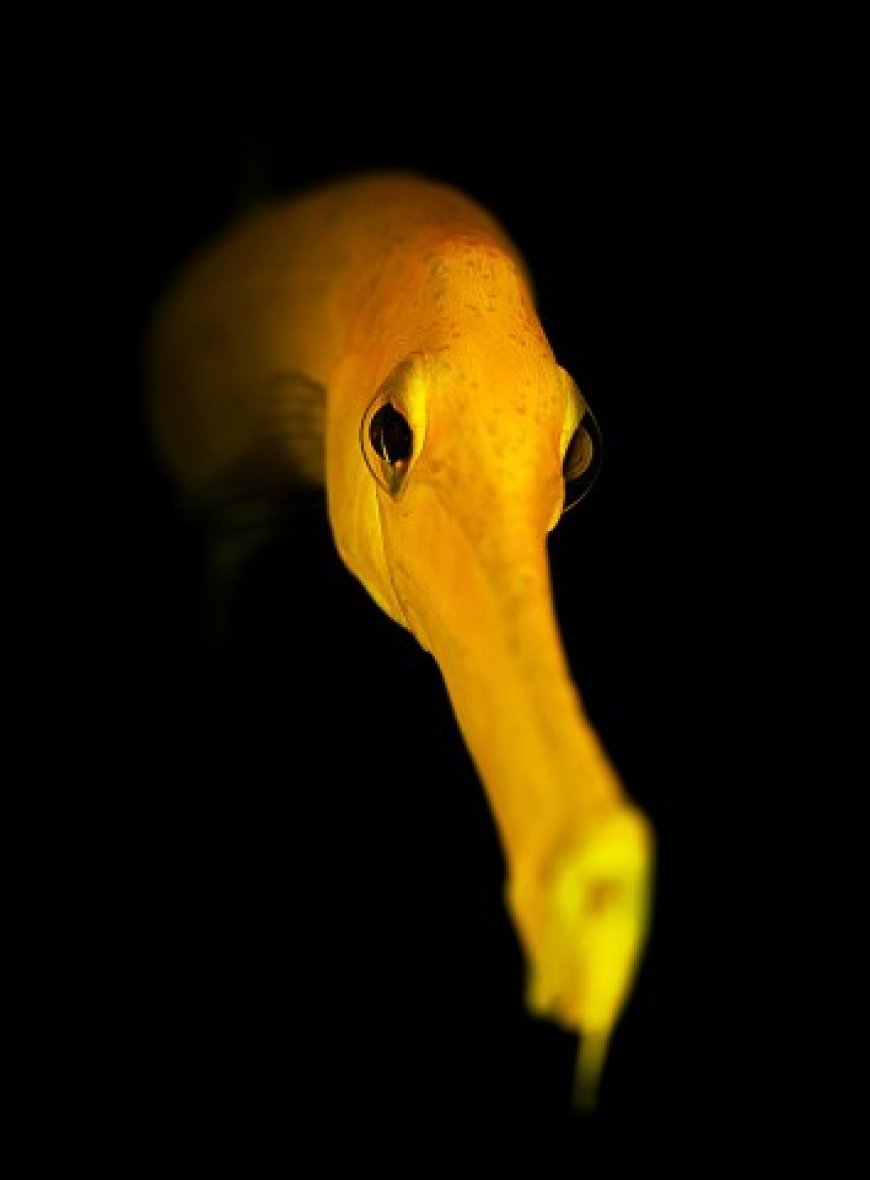
Trumpetfish are elongated reef fish found in tropical and subtropical waters, including the Canary Islands and Fuerteventura. They belong to a group of highly specialised ambush predators with tubular bodies and long snouts adapted for precise feeding.
The name comes from their distinctive tube-shaped mouth, which resembles a trumpet or flute-like structure. This allows them to draw in prey quickly using rapid suction feeding.
An Article by Hannah Mackay, Local Scuba Diving Instructor with The Voice Fuerteventura
What they look like
Trumpetfish are named for their long, tubular snouts which resemble a trumpet or flute-like shape. Their bodies are elongated and can reach between 40–80 cm in length, with a small mouth positioned at the end of the extended snout.
Their colouration varies depending on environment and can range from dark brown to greenish tones, and occasionally yellow. This ability to shift appearance helps them blend into their surroundings, particularly among coral and reef structures. Some individuals may also show a dark streak along the jaw or a distinct spot near the tail.
Their dorsal fin is soft and positioned towards the rear of the body, helping them maintain stability while hovering in the water column.
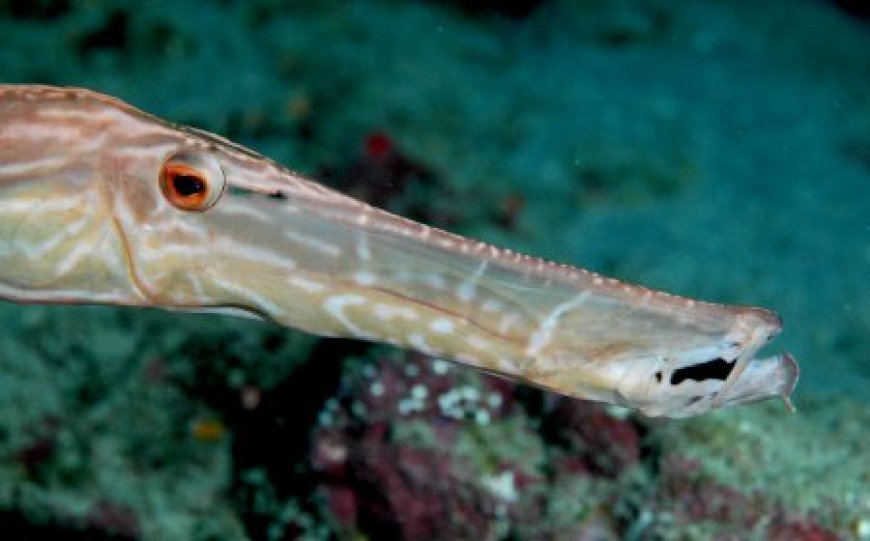
Close up of trumpetfish showing elongated tubular snout adapted for suction feeding
Where they live in Fuerteventura
Trumpetfish are typically found in rocky reef areas and coastal zones where there is structure to hide within or alongside. In Fuerteventura, they are most often seen hovering vertically in the water column or remaining still near reefs.
They are highly camouflaged and can be difficult to spot, often appearing as part of the reef or drifting vegetation rather than a distinct fish.
Feeding and hunting behaviour
Trumpetfish are ambush predators that feed on small fish and crustaceans, including schooling species such as wrasses. Their hunting strategy relies on stealth and precision rather than speed.
They are often seen hovering vertically in the water column, swaying gently with the current while blending into nearby reef structures. In this position they can remain almost invisible to passing prey.
When the moment is right, they strike rapidly, expanding their tubular mouth in a fraction of a second to create suction and pull prey directly in. Their jaws can open wide relative to their body size, allowing them to take surprisingly large prey.
Trumpetfish are also known to improve their hunting success by shadowing larger fish such as parrotfish, using them as cover before striking smaller fish nearby. They are generally solitary hunters but may occasionally be observed near other large reef fish when opportunities arise.
In Fuerteventura
Trumpetfish can be found in suitable reef habitats around Fuerteventura, particularly in areas with good structure and clear water. However, due to their camouflage and still hunting behaviour, they are often overlooked even when present.
For divers and snorkellers, spotting a trumpetfish is often a memorable encounter, as they can appear almost suspended in the water or perfectly aligned with reef features.
Trumpetfish are part of the diverse reef ecosystem found around the Canary Islands, contributing as specialist ambush predators within coastal waters. They are one of many interesting species that can be observed in the Marine Life in Fuerteventura guide.