The Conquest of Fuerteventura
Discover the conquest of Fuerteventura, from the arrival of Jean de Béthencourt to the surrender of the Majos and the beginning of Castilian rule.
 Luisa
Luisa

The conquest of Fuerteventura in the early 15th century marked a turning point in the island’s history, bringing an end to centuries of isolation and beginning a new era under European rule.
At the time, Fuerteventura was known as Erbania and was inhabited by the Majos, a people of North African origin who had lived on the island for centuries. Their society was divided into two regions: Maxorata in the north, ruled by Ayose, and Jandía in the south, ruled by Guise. These two kingdoms were separated by a stone wall that ran across the island, the remains of which can still be seen today in the area known as La Pared.

The remains of the wall that once divided the island into the kingdoms of Maxorata and Jandía - La Pared
Arrival by Sea
In 1402, a Norman expedition led by Jean de Béthencourt and accompanied by Gadifer de La Salle set sail to the Canary Islands. Backed by the Crown of Castile, their mission was to explore, conquer and claim the islands for European rule.
After establishing a base in nearby Lanzarote, their attention turned to Fuerteventura. The island’s proximity to Africa and its strategic position made it an important target.
Conflict and Resistance
When the Europeans arrived, they were met with resistance from the Majos. Although the islanders were skilled in surviving the harsh environment, they were no match for the weapons, armour and military tactics of the invaders.
There were a number of skirmishes and confrontations across the island, as the Majos attempted to defend their land. Despite their courage, the imbalance in weaponry and organisation made sustained resistance difficult.

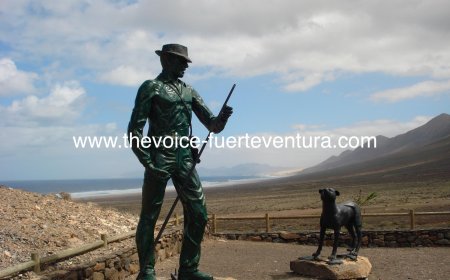
Statues of Guise and Ayose, the two rulers of Fuerteventura at the time of the conquest
Guise and Ayose
The two rulers of the island, Guise in the south and Ayose in the north, eventually faced an impossible situation. Outnumbered and outmatched, they were forced to make a decision that would shape the future of Fuerteventura.
According to historical accounts, both leaders ultimately surrendered to the Europeans. Their submission marked the end of indigenous rule on the island and the beginning of a new era under Castilian control.
Prophecy and Legend
Some stories from the time suggest that the arrival of the Europeans had already been foretold. The wise women of the island, Tamonante and Tibiabin, are said to have warned the rulers of powerful people arriving by sea and advised them not to resist.
Whether history or legend, these stories form an important part of Fuerteventura’s cultural heritage and offer a different perspective on the events surrounding the conquest.
Aftermath of the Conquest
Following the surrender, Fuerteventura was brought under the control of Jean de Béthencourt, who ruled the island on behalf of Castile. Land was redistributed, and European systems of governance, religion and agriculture were introduced.
For the Majos, life changed dramatically. Many were enslaved or absorbed into the new society, and over time their original way of life began to disappear. However, their legacy remains an important part of the island’s identity and can still be seen today in place names, traditions and archaeological sites.
A Turning Point in History
Their surrender marked not just a military defeat, but the gradual decline of the Majos’ traditional way of life. The conquest of Fuerteventura marked a turning point in the island’s history. It brought an end to centuries of isolation and began a new chapter shaped by European influence.
Today, the story of the conquest helps us to better understand the island’s past and the people who lived here long before modern tourism and development transformed Fuerteventura into the destination we know today.