The Majos of Fuerteventura – The Island’s First Inhabitants
Discover the Majos of Fuerteventura, the island’s original inhabitants, their origins, way of life, beliefs and how they survived in a harsh volcanic environment.
 Luisa
Luisa

The amount known about the original settlers of Fuerteventura is still limited, but ongoing archaeological discoveries are helping to build a clearer picture of these early inhabitants. Archaeological sites across the island, including Villaverde, La Atalayita and Tindaya, continue to reveal new information about their lives.
The original inhabitants of Fuerteventura were known as the Majos (pronounced Mahos).
Recent excavations, including digs in Villaverde, have uncovered pottery, tools and organic material that continue to provide valuable insights. Findings from other Canary Islands are also helping historians piece together the story of the people who once called Fuerteventura home.
While there are still many unanswered questions, what has already been discovered is both fascinating and important in understanding the island’s past.
Stories and legends also played an important role in Majo culture, including the tale of the wise women of Fuerteventura.
Early Evidence of Life
Archaeological evidence shows that there has been life on Fuerteventura since prehistoric times.
Remains found in caves in Villaverde include evidence of livestock such as goats, sheep and pigs, dating back to around 200 AD. These discoveries suggest that early settlers were already farming and living in organised communities.

Reconstruction of a traditional Majo settlement in Fuerteventura Photo: Model from Lanzarote Majorero Museum
Isolation and Mystery
It is believed that people may have lived in the Canary Islands as far back as the 5th century, but much of what we know comes from later periods, particularly around the 15th century.
Before this time, the islands were largely isolated. Although they appeared in ancient maps and texts, they were not widely explored or documented in detail, which is why so much of their early history remains uncertain.
Legends and Ancient Beliefs
Early references to the Canary Islands often blurred the line between fact and myth.
Some ancient writings described mysterious lands beyond the “Pillars of Hercules,” inhabited by strange creatures such as sea monsters, giants and mythical beings. Other descriptions spoke of islands formed by fire and volcanic activity.
While we now understand the volcanic origins of the islands, these early accounts show how little was truly known about them at the time.
Theories of Origin
One of the most widely accepted theories is that the original settlers arrived from North Africa.
Archaeological evidence suggests they were of Berber origin, arriving by sea and later becoming isolated from the mainland. Over time, each island developed its own identity and culture.
Although the term “Guanche” is often used to describe the original inhabitants of the Canary Islands, it actually refers specifically to the people of Tenerife. The inhabitants of Fuerteventura were known as the Majos, or Maxos.
Erbania – The Island Divided
In ancient times, Fuerteventura was known as Erbania and was divided into two regions.
A stone wall once ran across the island from coast to coast, separating these territories. Parts of this wall can still be seen today in the area known as La Pared.
The northern region, Maxorata, was ruled by Ayose, while the southern region, Jandia, was ruled by Guise. The people living in these regions shared similar origins but developed differences in lifestyle, farming and settlement due to the varied landscape.
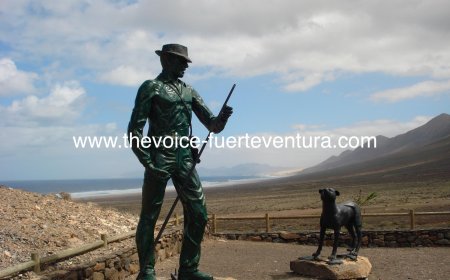
Statues of these two leaders can still be seen today overlooking Betancuria.

Living on the Land
The Majos lived a simple but resourceful life, adapting to the island’s harsh environment.
They raised animals such as goats, using them for food, clothing and tools. They also made use of local plants and natural resources to survive in a landscape with limited fresh water.
Learn more about the history of Fuerteventura
Caves and Natural Shelter
Many of the early inhabitants lived in caves, particularly along the coastline.
In addition to natural caves, they also used lava tubes formed by volcanic activity. These provided excellent shelter, protecting them from the wind while maintaining a stable temperature throughout the year.
These natural shelters can still be found across the island today, particularly in areas of malpais.
Early Settlements
The Majos or Mahos also built simple stone structures, some of which still remain. Sites such as La Atalayita provide one of the clearest insights into how the Majos lived and organised their communities.
One of the best examples is the settlement at La Atalayita near Pozo Negro. This site provides a valuable insight into how early communities were organised, including the layout of homes and shared spaces.
Archaeological work here has uncovered tools, pottery and other everyday items, helping to paint a clearer picture of daily life.

Photo: Human dwellings uncovered in La Atalayita
Beliefs and Burial Practices
Despite the limited written records, there is evidence that the Mahos had complex beliefs and rituals.
Footprints carved into stone have been discovered in certain areas, suggesting places of worship. It is believed they may have worshipped both sun and moon deities.
Tindaya Mountain is thought to have held particular spiritual importance, and may have been used for ceremonial purposes.
There is also evidence that the Mahos practised mummification. Mummies, known as Xaxos, have been discovered on the island. These were often preserved using salt, animal skins and furs, and are believed to have been individuals of high status.
A Harsh but Adapted Life
Life on Fuerteventura was not easy.
With limited water, strong winds and challenging terrain, survival required resilience and adaptability. However, the island once had more vegetation than it does today, which would have supported farming and daily life.
The Mahos adapted to these conditions and created a sustainable way of life that lasted for centuries.
Final Thoughts
Although much about the Mahos remains a mystery, ongoing discoveries continue to reveal more about their lives, beliefs and survival.
Their story is an important part of Fuerteventura’s history and adds depth to the island we see today.
An Article by Local historian, Bernie Power, with The Voice Fuerteventura