Devilfish - Mobula Mobular
Devilfish Mobula mobular are large pelagic rays occasionally seen around Fuerteventura. Learn about their behaviour lifecycle and presence in the Canary Islands.
 Luisa
Luisa
The devilfish, or giant devil ray, is one of the larger pelagic species that can be encountered in the waters around Fuerteventura, although sightings are not common. When they do appear, it is usually in open water rather than close to shore, often moving steadily through the upper layers of the ocean.
An article by Hannah Mackay, Local Scuba diving instructor with The Voice
They are part of the same group as manta rays and share that same powerful, wing-like movement through the water. Despite their size, they can appear surprisingly effortless in motion, gliding rather than actively swimming as they cover distance along the island’s coastline.
What do they look like
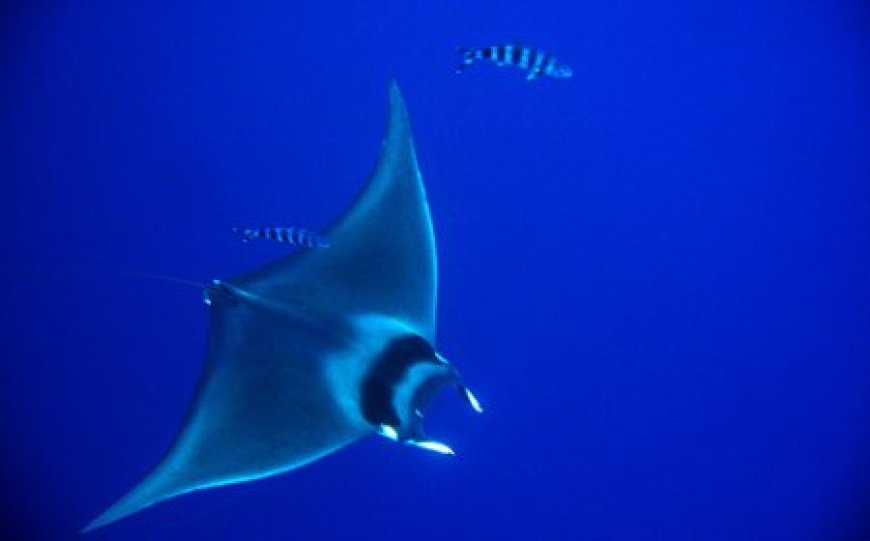
Devilfish are large, wing-shaped rays with a broad body and long, pointed pectoral fins that give them a distinctive triangular outline in the water. From above, they appear dark, usually a deep blue-grey to black, while the underside is much lighter, creating a clear contrast when seen against the surface.
At the front of the head are two forward-facing lobes, often referred to as cephalic fins, which give the species its “devilfish” name. These can be rolled or extended depending on how the animal is moving or feeding.
Unlike manta rays, the mouth is positioned slightly underneath rather than fully forward-facing, and the overall body tends to be more compact. When seen in the water, they move with slow, powerful wingbeats, often gliding between strokes in a way that makes them stand out immediately from other fish species.

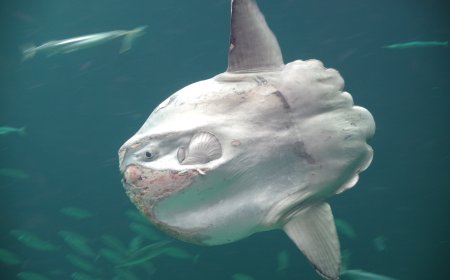
Devilfish Mobula mobular close up showing head shape and distinctive cephalic fins
Where do they live
Devilfish are a pelagic species, meaning they spend most of their time in open water rather than close to the seabed or within reef structures. Around Fuerteventura, they are more likely to be encountered offshore or in deeper coastal waters rather than in bays, rock pools, or typical snorkelling areas.
They move through the upper layers of the ocean but are capable of diving to significant depths, often following food sources. Their presence around the Canary Islands is linked to wider Atlantic movements, and they do not stay in one fixed area for long.
When seen locally, it is usually in clear, open water where they can be observed passing through rather than remaining in a specific location.
Behaviour and abilities
Devilfish are long-lived oceanic rays that have existed for around 20 to 25 million years, making them an ancient group within the marine ecosystem. They are powerful, active swimmers and spend much of their time moving through open water rather than remaining stationary on the seabed like many other rays.
They feed mainly on planktonic crustaceans and small schooling fish, often filtering food as they move through the water. While they are commonly seen near the surface when feeding, they are also capable of deep and sustained dives, reaching depths of nearly 2 kilometres and remaining submerged for extended periods before returning to shallower waters.
They are considered some of the more capable deep divers among pelagic rays, combining depth range with sustained speed and endurance in the open ocean.
Reproduction and lifecycle
Devilfish have a very slow reproductive cycle. Development takes place inside the mother, with a single pup typically carried for up to 12 to 25 months before birth. In most cases, only one pup is produced at a time.
Births usually occur in warmer months, and this low reproductive rate makes the species particularly vulnerable to environmental pressures. Changes in food availability, habitat conditions, and human impact can all affect population stability over time.
Because of this slow lifecycle, recovery from population decline is gradual compared to faster-reproducing marine species.
Behaviour in groups
Devilfish are often seen as social animals, sometimes encountered in loose groups rather than complete isolation. When feeding or moving through suitable conditions, they may appear alongside other individuals, particularly in areas where food sources are concentrated.
Unlike many rays that spend long periods resting on the seabed, devilfish are continuous swimmers. If you are lucky enough to see one, it is usually in motion — gliding steadily through the water column rather than remaining still.
In Fuerteventura
Devilfish are not a regular sight around Fuerteventura, but they are part of the wider pelagic ecosystem of the Canary Islands. When they are encountered, it is usually in open, deeper water rather than inshore areas or sheltered bays.
Sightings tend to be brief, with animals passing through rather than remaining in any one location. For most people in the water, they are not a species that forms part of the everyday snorkelling or nearshore diving experience.
Encounters are more likely in offshore conditions where deeper Atlantic waters come closer to the islands, bringing larger pelagic species through the area.
What this means locally
For those exploring the coastline of Fuerteventura, devilfish represent one of the more occasional visitors to the island’s waters. The marine life you are far more likely to see includes smaller reef and coastal species that are consistently present throughout the year.
More information on these regular species can be found in the Marine Life in Fuerteventura guide, which covers the fish and rays that make up the core of the local underwater ecosystem.