Christmas tree worm - Spirobranchus giganteus
Christmas tree worms Spirobranchus giganteus are colourful reef invertebrates found in coral structures. Learn about their behaviour, feeding and presence in Fuerteventura waters.
 Luisa
Luisa
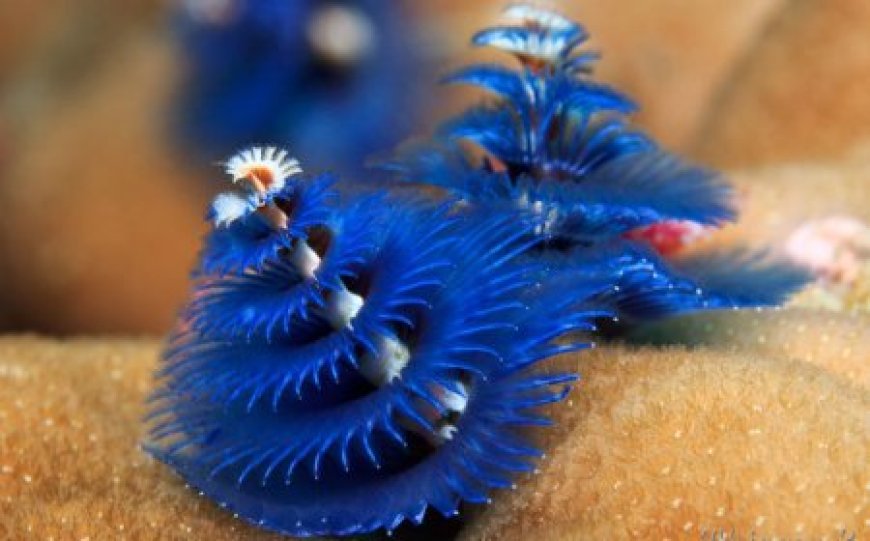
Christmas tree worms are small marine worms that live embedded within coral structures and are occasionally seen in the waters around Fuerteventura. They are not free-swimming species, but instead remain fixed within the reef, extending their colourful feeding structures into the water column when conditions are suitable.
Although small and often overlooked, they are one of the more visually striking invertebrates found in tropical and subtropical reef systems, and are most commonly associated with healthy coral environments.
An article by Hannah Mackay, Local scuba diving instrcutor with The Voice
What do they look like
Christmas tree worms are small tube-dwelling marine worms that live hidden within coral. Only their feeding structures are visible, which extend out from the coral surface when they are active.
These structures are brightly coloured and spiral outward in a shape that resembles small Christmas trees, giving the species its common name. Colours can vary widely, including shades of red, orange, yellow, white, and blue, sometimes even within the same individual.
The visible “crown” is made up of two feather-like appendages used for feeding and respiration. When disturbed, the worm can rapidly retract back into its protective tube, disappearing completely into the coral.
From a distance they are often mistaken for small coral features rather than animals, which is why they are frequently overlooked in reef environments.
Where do they live
Christmas tree worms live embedded within hard coral structures, where they build and occupy small calcareous tubes. They are not free-moving animals and remain fixed in place for their entire adult life.
They are most commonly associated with healthy reef environments in warm, clear waters. Around Fuerteventura, they are rare and would only be encountered in suitable reef-like conditions where coral growth allows for their presence.
Each worm occupies its own tube within the coral, with many individuals often found close together across a single reef surface. Despite this, they do not interact directly with each other and remain individually anchored in place.
Their dependence on coral means their presence is closely linked to reef health and water quality.
Behaviour
Christmas tree worms are sedentary reef invertebrates that remain fixed inside their coral tubes for life. They do not move between locations once established, relying entirely on the surrounding coral structure for protection and support.
Their behaviour is closely linked to feeding and environmental conditions. When active, they extend their crown-like feeding structures into the water column, filtering plankton and organic particles carried by the current. These structures also allow gas exchange while extended.
At the slightest disturbance, they react instantly by retracting deep into their tubes, disappearing completely from view. This rapid response is their primary defence mechanism and one of their most recognisable behaviours.
They spend most of their time hidden, with only short periods of full extension visible when conditions are calm.
Feeding and structure
Christmas tree worms feed using specialised crown-like structures called radioles. These feather-like appendages extend from the worm’s body and form the bright spiral shape visible on the coral surface.
When extended, the radioles capture microscopic particles from the water, including phytoplankton and other organic material. These are transported along the structures directly to the worm’s mouth. The same system also supports respiration, meaning the crown functions as both a feeding and breathing adaptation.
The visible spirals are small, typically only a few centimetres tall, but highly efficient at filtering food from passing currents. Their bright colours make them one of the most visually distinctive invertebrates on the reef when extended.
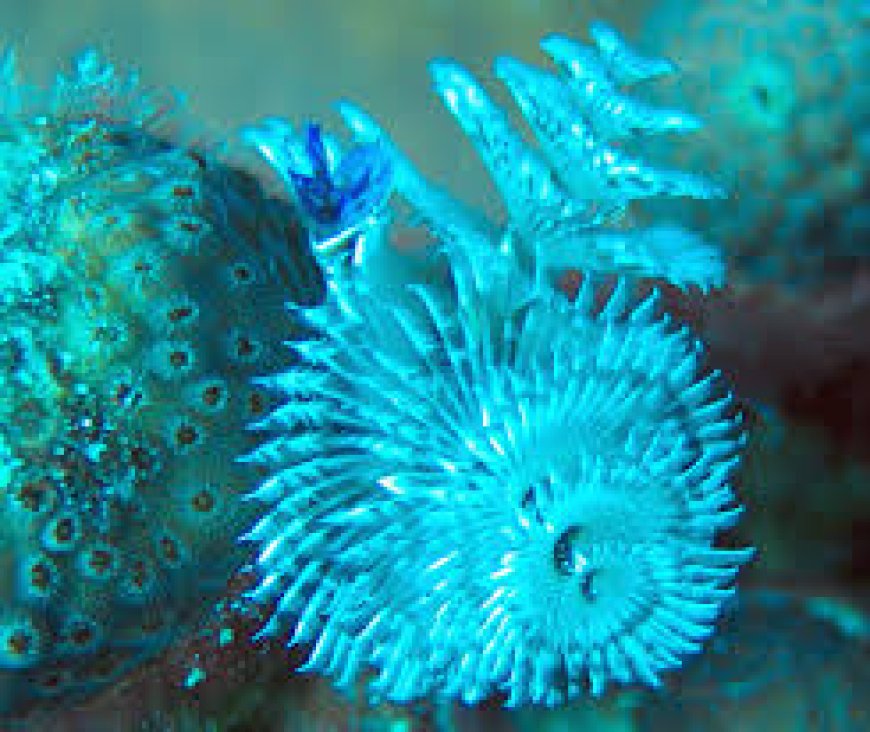
Christmas tree worm Spirobranchus giganteus showing bright blue feeding crown extended from coral surface
Reproduction and lifecycle
Christmas tree worms reproduce by releasing eggs and sperm directly into the water column, where fertilisation takes place externally. Once released, the eggs drift with ocean currents as part of the plankton.
As they develop, larvae eventually settle onto suitable coral structures. Once a suitable location is found, they begin to bore into the coral and form their own protective tube, marking the start of their sedentary adult life.
From this point onward, they remain fixed in place for life, growing and feeding entirely within the coral environment they have settled into.
In Fuerteventura
Christmas tree worms are not commonly encountered around Fuerteventura, as they depend on healthy coral reef structures to exist. When present, they are found in very specific reef-like conditions rather than widespread across the coastline.
For most snorkelling and diving experiences on the island, they are not a regular sight, but they remain part of the broader reef biodiversity in suitable habitats within the Canary Islands.
Where they do occur, they are often overlooked due to their small size and close resemblance to the coral itself until their feeding crowns are extended.
What this means locally
For those exploring Fuerteventura’s coastline, Christmas tree worms represent one of the more subtle reef invertebrates associated with coral environments. They are not a defining feature of local marine life but appear in more specialised habitats where conditions allow.
The marine life most commonly encountered around the island is covered in the Marine Life in Fuerteventura guide, which focuses on the species that form the core of the local underwater ecosystem.