Red Gurnard - Chelidonichthys cuculus
Red gurnard Chelidonichthys cuculus are distinctive seabed fish found around Fuerteventura. Learn about their behaviour, sensory fins and habitat in Canary Islands waters.
 Luisa
Luisa
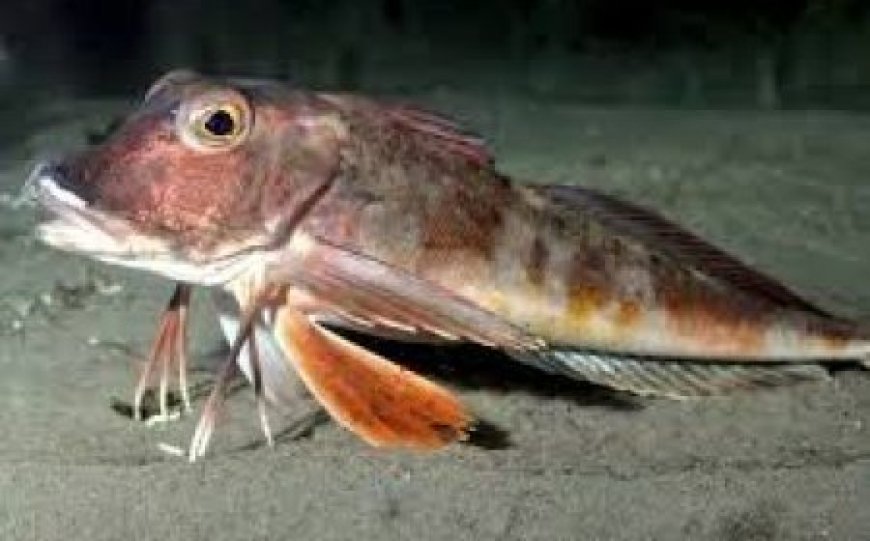
The red gurnard is a distinctive bottom-dwelling fish found in the eastern Atlantic and parts of the Mediterranean. It is a species closely associated with sandy and mixed seabed habitats, including areas around the Canary Islands and Fuerteventura.
It is well known for its unusual appearance and specialised fins adapted for life on the seabed.
What they look like
Red gurnards have a stout, elongated body with a large head, prominent eyes and a row of hard, bony scales. Their body is typically bright red with lighter pink and silver tones along the sides.
One of their most distinctive features is their large pectoral fins, which can be extended like wings. In some related species, these fins may show vivid colours such as blue when displayed.
Beneath the body are three free-moving fin rays on each side that function like sensitive “fingers”, allowing the fish to feel along the seabed for food.
These rays often give the impression that the fish is walking across the sand.
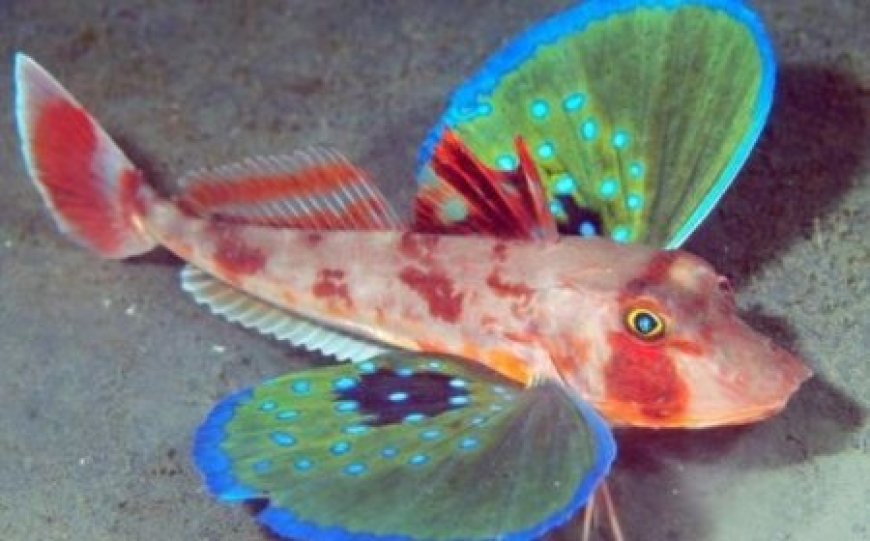
Red gurnard spreading pectoral fins used for display and movement
Where they live in Fuerteventura
Red gurnards are found on sandy, muddy and mixed seabeds across the eastern Atlantic, including waters around the Canary Islands.
They are typically associated with deeper coastal zones where they move close to the seabed in search of food. Their distribution includes both continental shelf areas and island coastal waters.
They prefer areas with softer substrates where their sensory fins can be used effectively to detect prey.
Behaviour and feeding
Red gurnards are bottom-feeding predators that use their specialised fin rays to locate small fish, crustaceans and invertebrates hidden in the sediment.
They move slowly across the seabed, probing the sand as they search for food.
When threatened, they can flare their large pectoral fins, creating a sudden visual display that may startle predators.
They are generally solitary or found in small groups.
Vocal behaviour
Red gurnards are known for producing croaking or grunting sounds, particularly when handled or disturbed. These sounds are created by vibrations within their swim bladder.
Their common name is believed to be linked to this grunting behaviour, derived from an old French word meaning “to grunt”.
Reproduction and lifecycle
Red gurnards typically reach sexual maturity at around 2–3 years of age. Spawning occurs during spring and summer, with eggs released into open water where larvae develop in the plankton.
Females generally grow larger than males, and overall lifespan can reach over a decade in suitable conditions.
In Fuerteventura
Red gurnards are part of the wider seabed fish community around Fuerteventura, particularly in sandy and mixed habitats.
Although not always commonly seen due to their bottom-dwelling behaviour, they are present in suitable environments around the island.
They are one of the more unusual-looking fish species encountered in deeper coastal waters.
The red gurnard is part of the diverse seabed fish community found around the Canary Islands, sharing its habitat with other bottom-dwelling species adapted to sandy and mixed substrates.
For more marine species found in the region, see the Marine Life in Fuerteventura guide.