Smooth-hound Shark or Dogfish - Mustelus spp.
Smooth-hound sharks (dogfish) Mustelus spp are harmless bottom-dwelling sharks found around Fuerteventura. Learn about their behaviour, feeding and habitat in Canary Islands waters.
 Luisa
Luisa
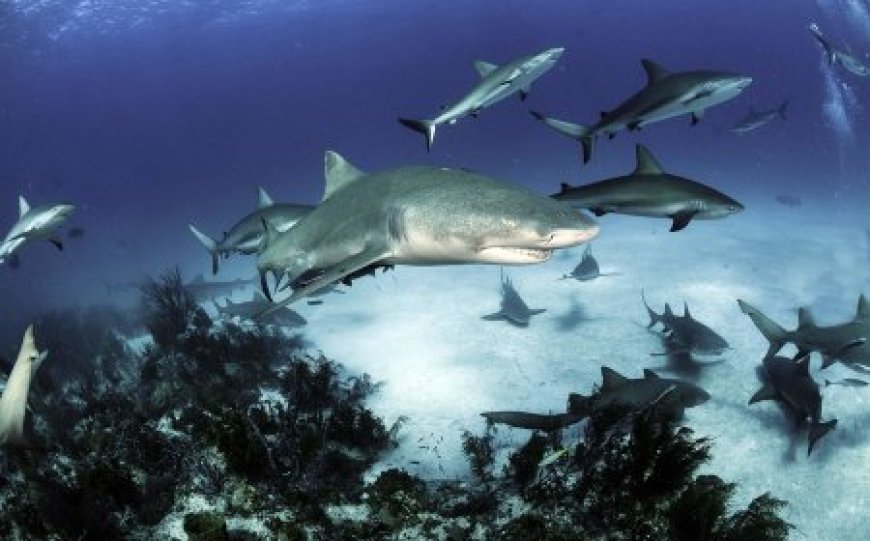
Smooth-hound sharks, commonly known as dogfish, are small bottom-dwelling sharks found in the eastern Atlantic, including the waters around the Canary Islands and Fuerteventura.
Despite their name, they are not aggressive and are considered harmless to humans. They are often encountered in coastal waters and are an important part of the local marine ecosystem.
An Article by Hannah Mackay, Local Scuba diving instructor with The Voice Fuerteventura
What they look like
Smooth-hound sharks have a slender body, a pointed snout and relatively small teeth adapted for crushing prey. Their colouring is typically grey or brownish, allowing them to blend into sandy or muddy seabeds.
They are generally small to medium-sized sharks, with females growing larger than males.
Where they live in Fuerteventura
Smooth-hound sharks are commonly found near the seabed in coastal shelf areas, particularly over sandy or muddy bottoms.
Around Fuerteventura, they may be seen in shallow coastal waters where food sources are abundant. They are bottom-associated sharks and rarely seen in open water.
Behaviour and senses
These sharks are highly sensitive to their environment and use specialised electroreceptors known as the Ampullae of Lorenzini to detect electrical signals from other animals, including hidden prey.
They are generally shy and tend to avoid human activity. Their sensitivity means they often move away when swimmers or divers enter the water.
They are sometimes observed in groups, which is where the “dogfish” name originates.

Smooth-hound shark resting under seabed structure using camouflage for protection
Feeding
Smooth-hound sharks feed mainly on crustaceans such as crabs, along with small fish and cephalopods.
Their teeth are adapted for crushing hard shells rather than tearing large prey, making them well suited to benthic or seabed feeding.
Reproduction and lifecycle
Smooth-hound sharks are viviparous, meaning embryos develop inside the female and are born live.
Gestation lasts around 9–11 months, with females giving birth to multiple pups at a time. Newborns are already relatively well developed and immediately independent.
They can live for over two decades in the wild, and females typically grow larger than males.
Conservation status
Smooth-hound sharks are considered vulnerable in some regions due to fishing pressure and bycatch in nets.
Although not known to be dangerous to humans, they are sometimes caught unintentionally or targeted in small-scale fisheries.
They are an important species in maintaining seabed ecosystem balance and should be treated with respect when encountered.
In Fuerteventura
Smooth-hound sharks are part of the wider coastal shark community around the Canary Islands. While not always commonly seen, they are present in suitable habitats and contribute to the biodiversity of local marine ecosystems.
They are one of the more frequently misidentified small sharks in the region.
The smooth-hound shark is part of the bottom-dwelling predator community found around Fuerteventura, sharing its habitat with other seabed species such as rays, flatfish and crustacean-feeding fish.
For more marine species found in the region, see the Marine Life in Fuerteventura guide.