Tetir, Fuerteventura: The Sleepiest Village
Discover Tetir, a quiet inland village in Fuerteventura known for its traditional charm, local markets and peaceful rural setting.
 Luisa
Luisa
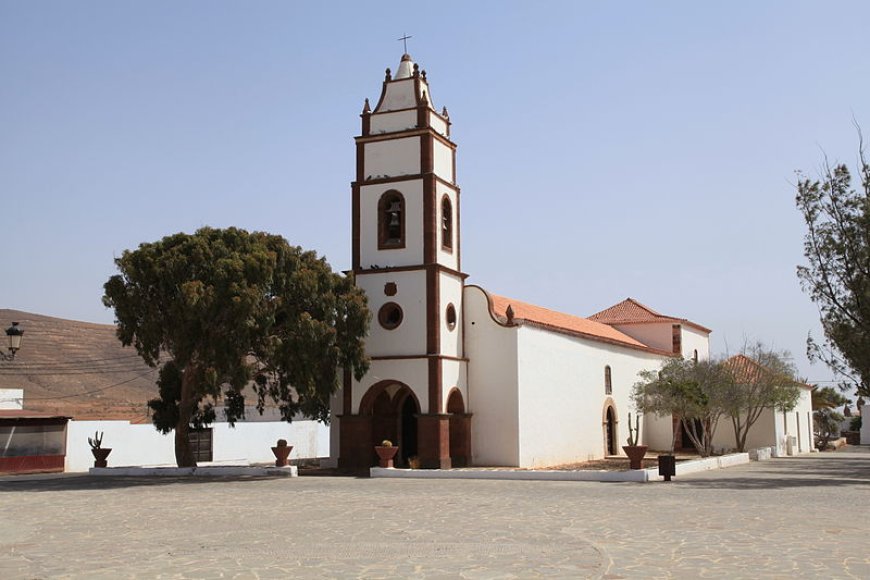
Tetir is a small inland village in the centre of Fuerteventura, offering a quieter and more traditional side of the island away from the main coastal resorts.
As you leave La Oliva in the northern part of the island and take the road towards Puerto del Rosario, you will pass through La Matilla before arriving in the village of Tetir.
If there were a prize for the “sleepiest village”, Tetir would be well in the running.
Arriving in Tetir
As you approach Tetir on the main road, you will notice signs asking you to reduce your speed, often accompanied by a speed camera due to the nearby bus stop, so it is worth paying attention.
These signs naturally slow you down as you enter this quiet inland village.
As with many villages, head towards the central plaza, where you will find a small selection of bars — a good place to take a break, enjoy a snack and have a drink while looking around.
Walking and exploring the area
You will often find yourself in the company of birdwatchers and hikers in this area, as Tetir sits along one of the island’s inland walking routes and makes a good place to rest your feet for a while.
It is also an ideal spot to take a break and enjoy a cold drink when the sun is high.
Keep an eye out for the small burgundy walking route signs as you wander around, and take note of the distances.
Walking in the heat here is very different from a hike through woodlands back in the UK, and the sun can take its toll more quickly than expected.

Walking route signs around Tetir show distances between inland villages and highlight the area’s network of trails.
Tetir Church
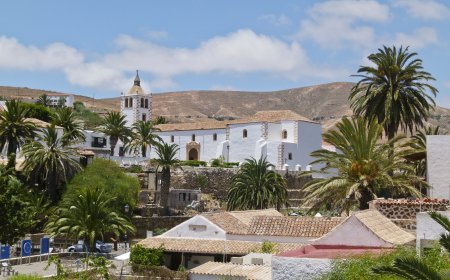
The church in Tetir is well worth a look, with its unusual pagoda-style design and tower that can be seen from miles around.
Inside, the building contains a range of fine artwork, and the altarpiece is dedicated to Domingo de Guzmán, founder of the Dominican order in 1216 — a religious order that was influential on the island during the 17th and 18th centuries.
It replaced an earlier church dedicated to Saint Andrew, the patron saint of the village. His name can still be seen set into the stones on the nearby mountainside.

Inside Tetir church, where the altar and artwork reflect the village’s religious history.
Local life and markets
Life in Tetir moves at a slower pace, with a strong sense of local community and everyday routines centred around village life. Depending on when you visit, you may also come across the regular craft market, where you can sample and buy a range of local produce, offering a glimpse into the island’s agricultural traditions.
Local traditions
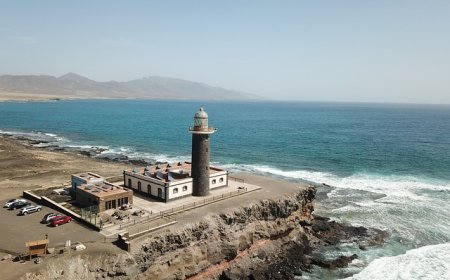
Many houses in Tetir are built using a local red stone, a durable material that is found across the island. This same stone can also be seen at landmarks such as the lighthouse at Punta la Entallada Lighthouse in the south.
The large round building visible from the main road is the local arena for Lucha Canaria, a traditional form of wrestling native to the Canary Islands. Similar in some ways to sumo, the sport focuses on strength and balance, with the aim of unseating your opponent or forcing them out of the sand-covered ring.
It remains a popular part of island culture and is still followed locally today.

Local life and markets
Life in Tetir moves at a slower pace, with a strong sense of local community and everyday routines centred around village life. Depending on when you visit, you may also come across the regular craft market, where you can sample and buy a range of local produce, offering a glimpse into the island’s agricultural traditions
Possibly the sleepiest village in Fuerteventura
Behind the church in Tetir is a small, well-kept cemetery, where the inscriptions offer a glimpse into the history of the area.
Tetir is also home to the island’s pet cemetery, set in a peaceful rural location.
Traditional agricultural activities, such as farming and cheese making, can still be seen in the surrounding area, although the village is far quieter than it once was.
Despite this, Tetir remains a lived-in village with a calm, unhurried atmosphere — a quiet and tranquil place that is well worth a short stop, even if just for a drink while passing through.
Tetir is also close to other traditional inland villages such as Tefía and Pájara, where you can explore rural life and local history.
Tetir is also featured in our guide to places to visit in Fuerteventura, highlighting some of the island’s more traditional inland locations.
If you are planning to see more of the island, take a look at our guide to exploring Fuerteventura.
An article by local historian, Bernie Powers, with The Voice Fuerteventura