Pájara, Fuerteventura: History and Hidden Detail
Explore some of the towns and villages in Fuerteventura, such as Pájara where you may discover more than just quaintness and history, but also a secret code, steeped in history and iconography. Can you unravel the Pájara code?
 Luisa
Luisa
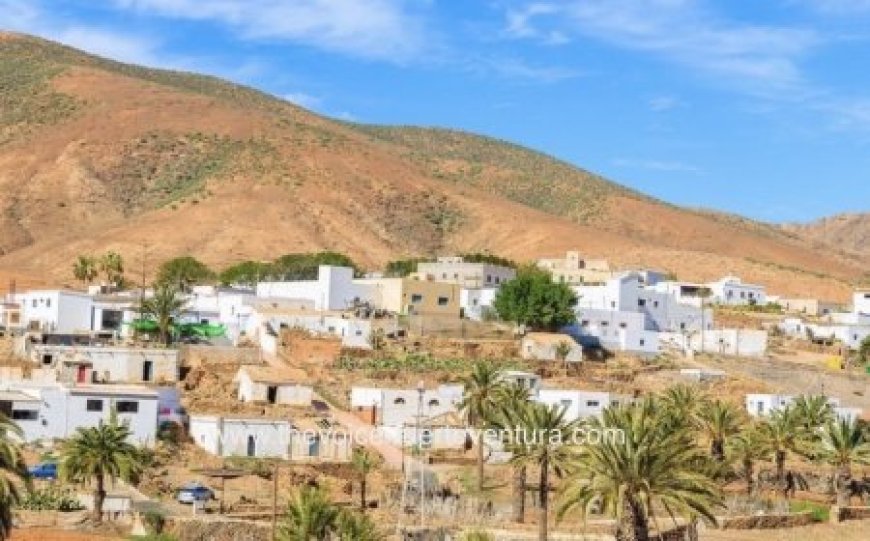
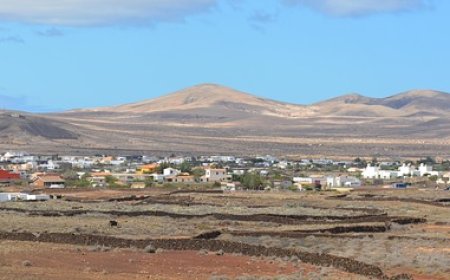
Pájara is one of the oldest settlements on the island, set in a valley in the south-west of Fuerteventura.
Originally an offshoot of Betancuria, the island’s former capital, Pájara survived the destruction caused by the Berber raid of 1593, which left much of Betancuria in ruins.
Today, it remains an important inland town, known for its historic centre, traditional architecture and relaxed atmosphere.
Arriving in Pájara
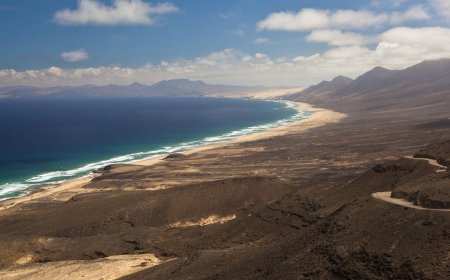
Pájara is located in the south-west of the island, around 40 km from Fuerteventura Airport, and sits on the edge of the Jandía Peninsula.
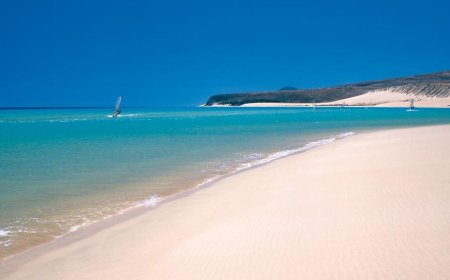
It is a place many visitors pass through when travelling between the north of the island and the southern beaches, including Morro Jable and Sotavento Beach.The town is also a convenient stop for supplies or a break in the journey, with a small but lively centre and easy access from the main road.
Pájara is also a good base for exploring nearby places such as Ajuy, known for its dramatic coastline and caves.
The Church of Nuestra Señora de Regla
At the heart of Pájara is its most distinctive landmark, the Church of Nuestra Señora de Regla.
Built between 1687 and the early 18th century, the church is known for its unusual and intricate carvings around the main entrance, often noted for their resemblance to Aztec-style designs. These details make it one of the most unique religious buildings in the Canary Islands.
The name “Pájara” comes from the Spanish word for a female bird, often associated with the hen, which is said to be represented in the carvings around the church doorway.
The church is dedicated to Our Lady of Regla, a figure associated with Saint Augustine and the early development of monastic rules, adding further historical depth to this already fascinating building.
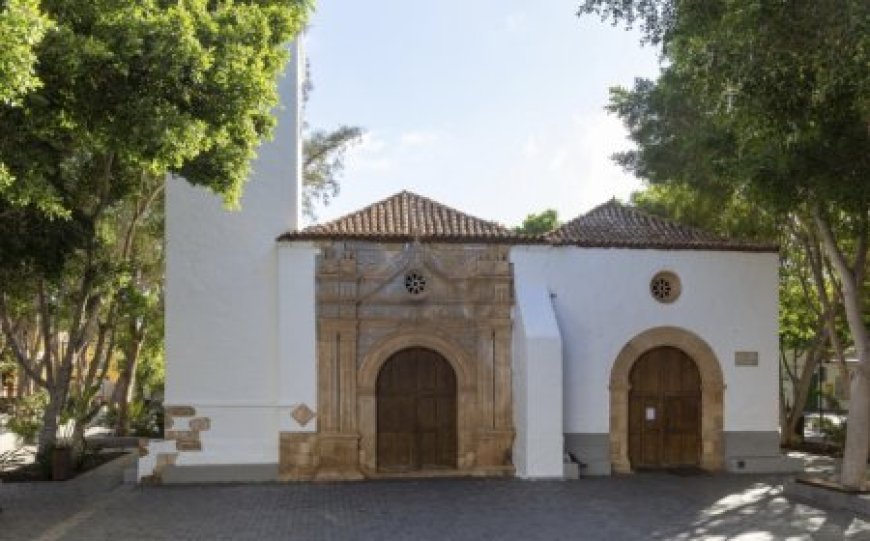
The Church of Nuestra Señora de Regla in Pájara, one of the most distinctive churches in Fuerteventura.
The Pájara Code
One of the most intriguing features of the church in Pájara is the collection of unusual carvings around the main entrance.
Above the doorway, you can see a symbol resembling two serpents forming a continuous loop, often compared to the Ouroboros, an ancient motif found in many cultures and commonly associated with cycles and continuity.
Across the portico, there are a number of other carved figures, including human faces, serpents and symbolic shapes. These details have led to ongoing debate, with some suggesting influences from distant cultures, while others believe they are purely decorative or symbolic within a local context.
Whatever their origin, these carvings give the church a distinctive character and have become one of the most talked-about features of Pájara.
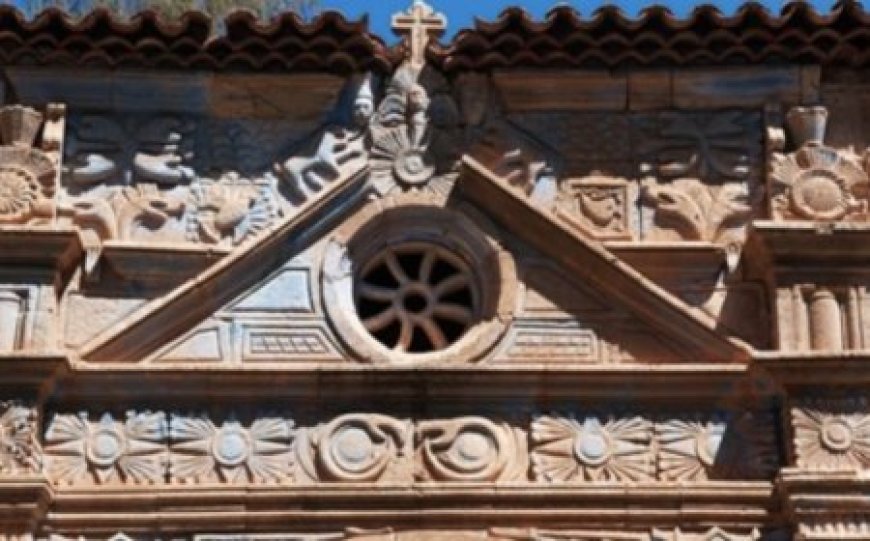
Detailed carvings on the church in Pájara, the focus of the “Pájara Code” mystery.
Funding and influences
Much of the church in Pájara is believed to have been funded by a returning merchant who had spent time in the New World.
It is thought that this connection may have influenced some of the decorative details, and possibly the Madonna housed within the church.
During this period, Augustinian monks were active both in Fuerteventura and across parts of the Americas, which may help explain some of the stylistic influences seen here.
Inside the church, there are a number of artworks and altarpieces worth taking the time to explore, adding further depth to this already distinctive building.
Village life in Pájara
The centre of Pájara is a pleasant and leafy space, with trees providing welcome shade around the main square.
Near the church, you can see an original donkey-driven water wheel, once used to draw water for the local community. It has been carefully preserved as a reminder of how daily life once depended on simple, practical solutions.
There are also a number of restored buildings in the area, making it an enjoyable place to wander, take in the surroundings and stop for lunch or a drink.
As you explore, you may find yourself looking a little closer at the carvings on the church, adding to the intrigue that surrounds what is often referred to as the “Pájara Code”.
Pájara is also well placed for exploring other inland villages such as Tetir and Tefía, both offering a similarly traditional and peaceful side of the island.
Pájara is also a good base for exploring nearby places such as Ajuy, known for its dramatic coastline and caves.
An article by Local Historian, Bernie Power, with The Voice Fuerteventura