Angel Sharks - Squatina squatina
Angel sharks Squatina squatina are rare bottom-dwelling sharks found around Fuerteventura. Learn about their camouflage, behaviour, lifecycle and conservation status.
 Luisa
Luisa
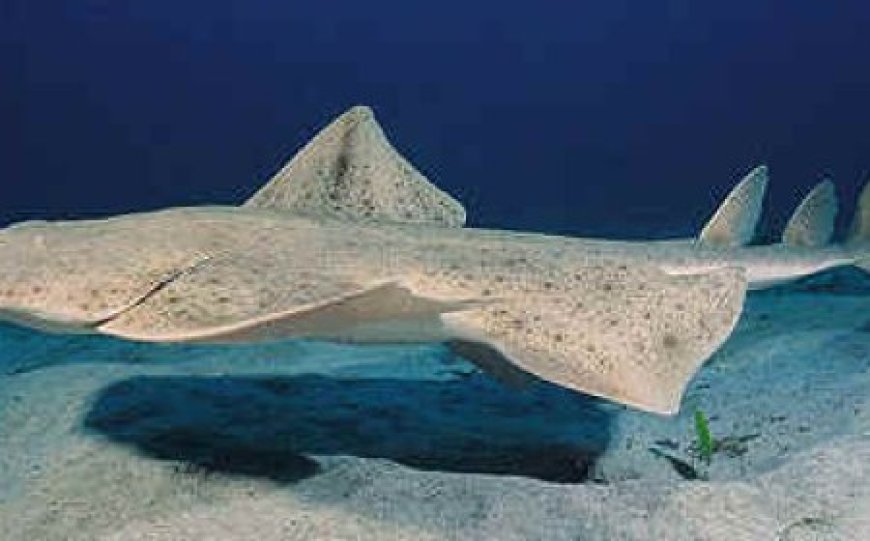
Angel sharks are one of the most unusual and elusive shark species found in the waters around the Canary Islands, including Fuerteventura. Once more widespread across the northeast Atlantic, their populations have declined significantly in recent decades, making sightings increasingly rare.
Despite their name, they are not aggressive towards humans and are generally harmless unless provoked. They are bottom-dwelling ambush predators that spend much of their time partially buried in sand or sediment.
An article by Hannah Mackay, Local Scuba Diving Instructor with The Voice Fuerteventura
What they look like
Angel sharks have a flattened, ray-like body with broad pectoral fins that extend outward from the head, giving them a distinctive angular shape. This body form often leads to confusion with rays when they are seen resting on the seabed.
Their coloration ranges from sandy browns to reddish or grey tones, often with mottled patterns that provide excellent camouflage against the seabed. This allows them to remain almost invisible when buried in sand.
They have large eyes positioned on the upper surface of the head and a wide mouth located at the front, adapted for sudden ambush feeding.
Where they live in Fuerteventura
Angel sharks are closely associated with sandy and muddy seabeds where they can bury themselves for camouflage. Around Fuerteventura, they are most likely to occur in deeper coastal zones rather than shallow reef areas.
They spend long periods motionless, partially or fully buried in sediment, making them extremely difficult to detect even when present.
Their distribution has declined significantly, and sightings in the region are now considered rare and noteworthy.
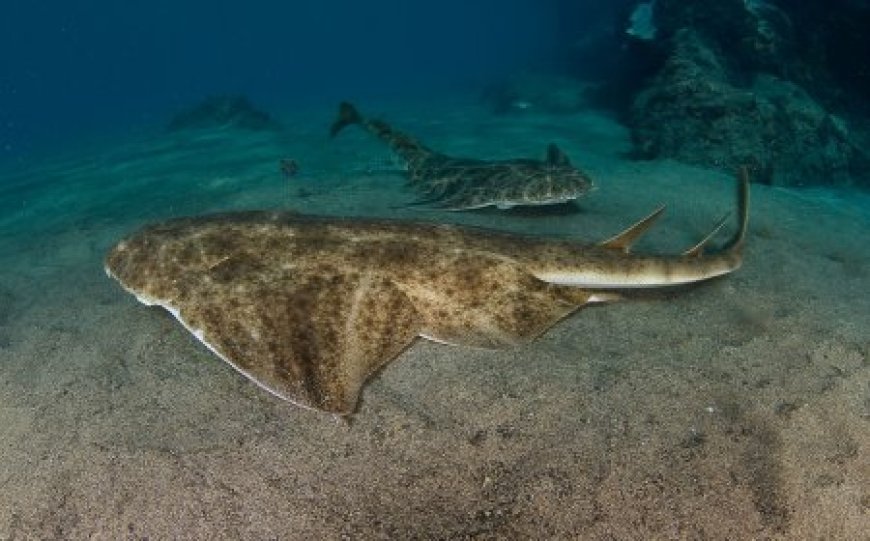
Angel sharks resting on seabed in sandy habitat in Canary Islands waters
Behaviour and feeding
Angel sharks are nocturnal ambush predators. During the day they remain buried in the seabed, with only their eyes and part of their head exposed. At night they become active, emerging to hunt.
They feed on small fish, crustaceans and other benthic organisms. Their hunting strategy relies on remaining motionless until prey comes close, at which point they strike rapidly and capture it using a sudden burst of movement.
Their behaviour is highly energy-efficient, relying on camouflage and patience rather than active pursuit.
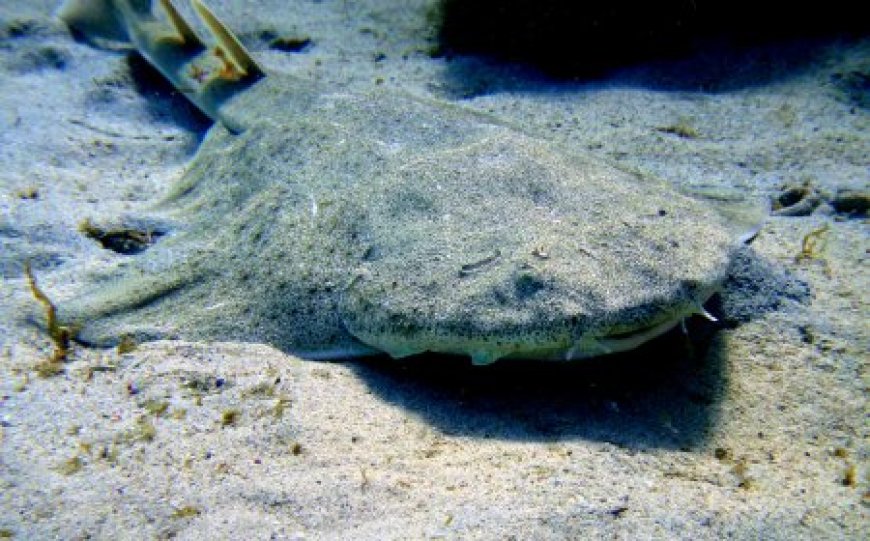
Angel shark camouflaged in sandy seabed using ambush hunting strategy
Reproduction and lifecycle
Angel sharks are ovoviviparous, meaning embryos develop inside eggs that remain within the female until they hatch internally. The young are then born live in deeper offshore waters, which provide added protection.
Gestation lasts around 10 months, and females typically give birth to a small number of pups, usually between 6 and 10. Newborns are relatively large at around 20 cm in length.
Maturity is slow, with females taking several years longer than males to reach reproductive age. This slow lifecycle contributes to their vulnerability as a species.
Survival rates for juveniles are low, with only a small proportion reaching adulthood, but those that do can live for several decades.
In Fuerteventura
Angel sharks are considered rare around Fuerteventura today, although they are part of the region’s natural marine heritage. Historical records show they were once more common in the Canary Islands.
Encounters are now unusual and typically occur in deeper sandy habitats. Their presence is of ecological importance due to their role as benthic predators.
For divers and marine observers, sightings are considered significant due to their conservation status and declining populations.
Angel sharks are one of the rarest and most remarkable species associated with the waters around Fuerteventura. While sightings are now uncommon, they remain an important part of the island’s wider marine ecosystem and highlight the diversity of life found beneath the surface.
If you want to explore more of the species found in local waters, you can discover them in the Marine Life in Fuerteventura guide.