Parrotfish - Scarus ghobban
Parrotfish Scarus ghobban are colourful reef fish found around Fuerteventura and the Canary Islands. Learn about their behaviour, habitat and unique feeding role in marine ecosystems.
 Luisa
Luisa
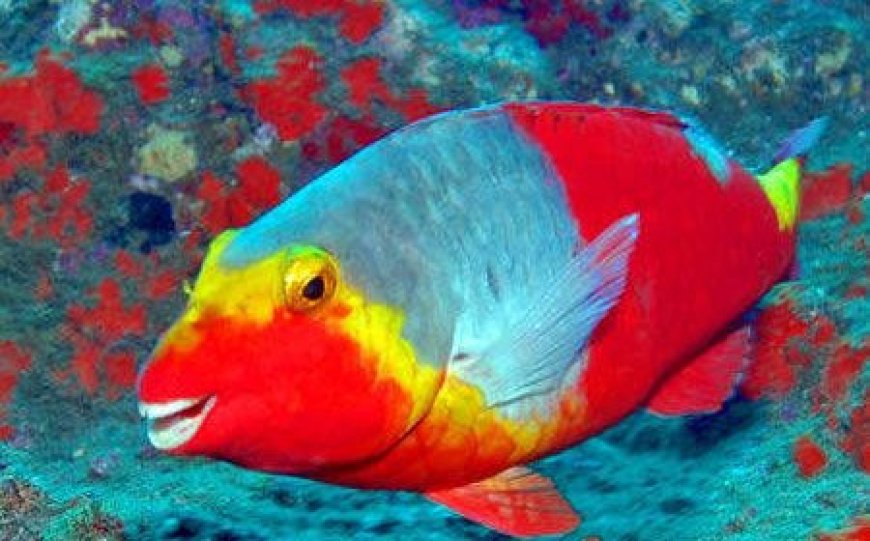
Parrotfish are one of the more recognisable reef fish found in the Canary Islands and can be relatively common in suitable coastal habitats. They are often seen moving in small groups over rocky seabeds where food sources are abundant.
They are locally known as vieja, and are part of the wider reef ecosystem around the islands. Their social structure is complex, with groups typically organised around a dominant male and multiple females. One of their most unusual biological traits is their ability to change sex. If the dominant male is lost from a group, the largest female may transition over time and take on the role of male, maintaining the structure of the group.
An article by Hannah Mackay, local Scuba diving instructor with The Voice Fuerteventura
What they look like
Parrotfish are brightly coloured reef fish with a thick, oval-shaped body and a distinctive beak-like mouth formed by fused teeth. This specialised mouth structure is what gives them their common name, as it resembles the curved beak of a parrot.
Their colours can vary widely depending on species, age, and sex, ranging from greens and blues through to pinks, oranges, and purples. Juveniles often look quite different from adults, with more muted tones and simpler patterns that change as they mature.
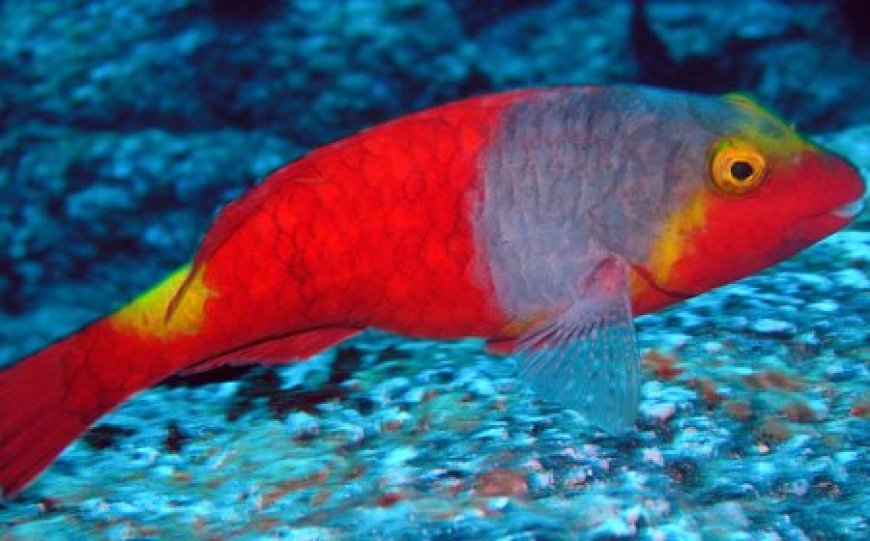
Close up of parrotfish showing fused beak like teeth and colourful reef markings
Where they live and what they eat
Parrotfish are typically found in rocky coastal areas from shallow shoreline waters down to around 50 metres depth. Around Fuerteventura, they are most commonly associated with rocky reef systems where algae growth is present.
They feed primarily on algae and plant material scraped from rock surfaces, but may also consume small invertebrates as part of their grazing behaviour. Their strong association with rocky bottoms makes them an important part of the nearshore reef ecosystem.
They can grow to around 50 cm in length depending on conditions and food availability.
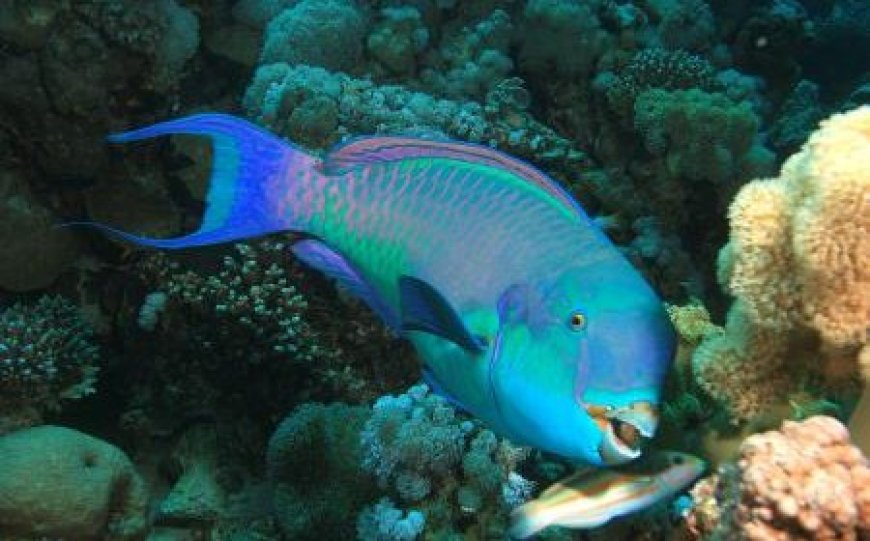
Parrotfish grazing on algae from rocky reef surfaces in coastal waters
Why they are called Parrotfish
Parrotfish take their name from their distinctive beak-like mouth, formed by fused teeth along both jaws. This structure allows them to scrape and grind material from rocks and coral surfaces.
Behind this beak is a specialised grinding system that breaks down ingested material before it passes through the digestive system. Much of what they consume cannot be fully digested, particularly reef rock and coral substrate, which is processed and later expelled as fine sand.
This process contributes significantly to natural sand production in tropical and subtropical reef systems, making parrotfish an important species in coastal sediment formation.
Behaviour and protection
Parrotfish are active daytime feeders, moving steadily across reef surfaces as they graze. They are often seen in small groups, especially where food sources are concentrated.
At night, they become less active and seek shelter within the reef structure. Some species produce a thin mucus covering while resting, which helps reduce detection by predators and may also provide protection from parasites.
Despite this defence, they are still part of the local food chain and can be caught by larger predators as well as fisheries in some regions.
In Fuerteventura
Parrotfish are a familiar part of Fuerteventura’s coastal reef systems and can often be seen in areas where rocky seabeds support healthy algae growth. While not present everywhere along the coastline, they are a regular sight in suitable habitats, particularly where the reef structure is more developed.
For snorkellers and divers exploring the island, they are one of the more noticeable reef fish due to their colour, size, and steady grazing behaviour. Encounters usually happen close to the seabed, where they move along the rocks feeding.
They form part of the wider reef community found around the Canary Islands and are a good indicator of healthy nearshore marine environments.
If you are exploring the waters around Fuerteventura, parrotfish are just one of many species that make up the island’s rich underwater ecosystem. You can discover more of the marine life commonly found here in the Marine Life in Fuerteventura guide, which brings together the key species you are most likely to encounter in local waters.