La Oliva, Fuerteventura – Historic Town in the North of the Island
Discover La Oliva in Fuerteventura, a historic inland town in the north of the island, known for its traditional character and important role in the island’s history.
 Luisa
Luisa
La Oliva is a historic inland town in the north of Fuerteventura, known for its traditional character and its important role in the island’s past.
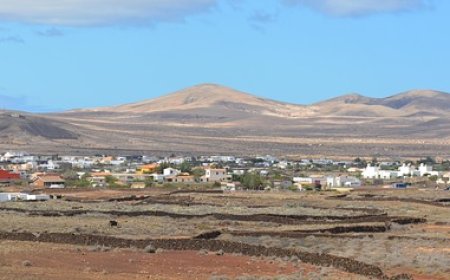
Today, it remains an important part of the island’s identity, acting as the administrative heart of a municipality that includes well-known coastal areas such as Corralejo and El Cotillo. While La Oliva itself is a quiet town, its history and connections make it an important starting point for exploring the north of the island.
Travelling Through the Villages
Starting from the popular holiday resort of Corralejo in the north of Fuerteventura, a long, relatively straight road leads inland towards La Oliva.
The journey is easy to do by hire car, as there is really only one main route, making it difficult to get lost. Along the way, you will pass through smaller villages such as Villaverde, often referred to as the “bread basket of the island” due to its agricultural importance in earlier times.
This rural area has long been used for farming, with open land and fertile soil supporting the growth of local produce. It is also slightly cooler here than on the coast, with less salt in the air, helping crops such as vegetables and the island’s well-known aloe vera plants to thrive.
La Oliva – Northern Fuerteventura
The next village you will come to is La Oliva, named after the wild olive trees that once grew abundantly in the area.
The first settlers are believed to have arrived here around 1510. Among them were the Hernández brothers, who were responsible for overseeing the guards that protected the grain fields and for building some of the earliest shelters in the area.
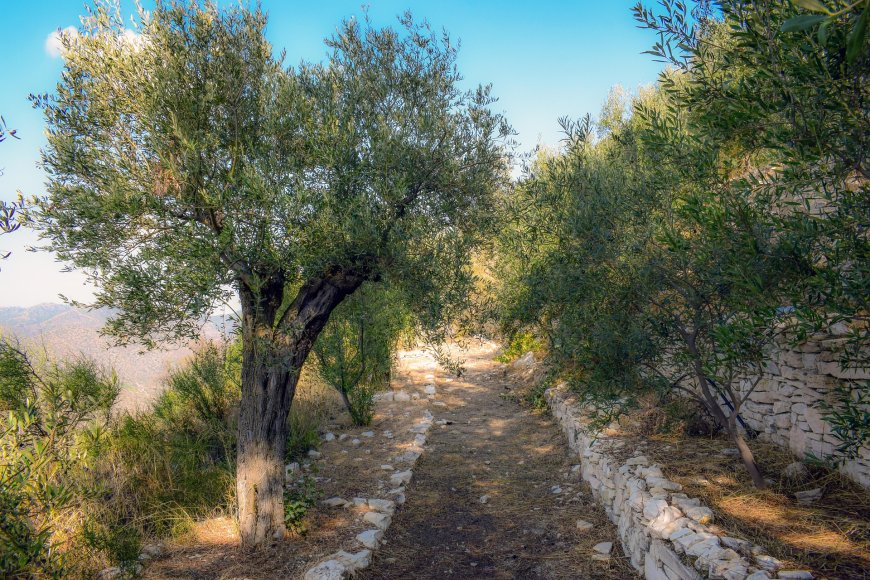
Olive groves in La Oliva, reflecting the landscape that gave the village its name.
The Church in La Oliva Main Square
As the settlement in La Oliva grew, more people moved into the area and it gradually became a small but established village. Today, there are still ruins visible from early farmhouses, along with extended and renovated homes scattered across the surrounding countryside. Many of these retain features from their agricultural past and are now used as family homes or small goat farms.
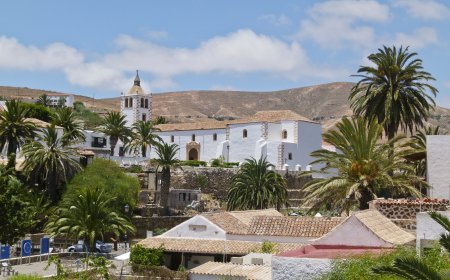
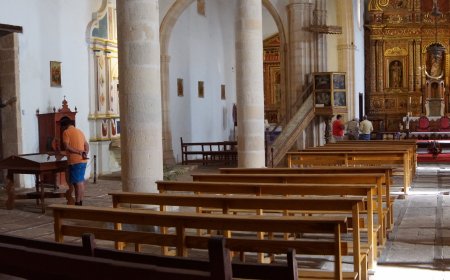
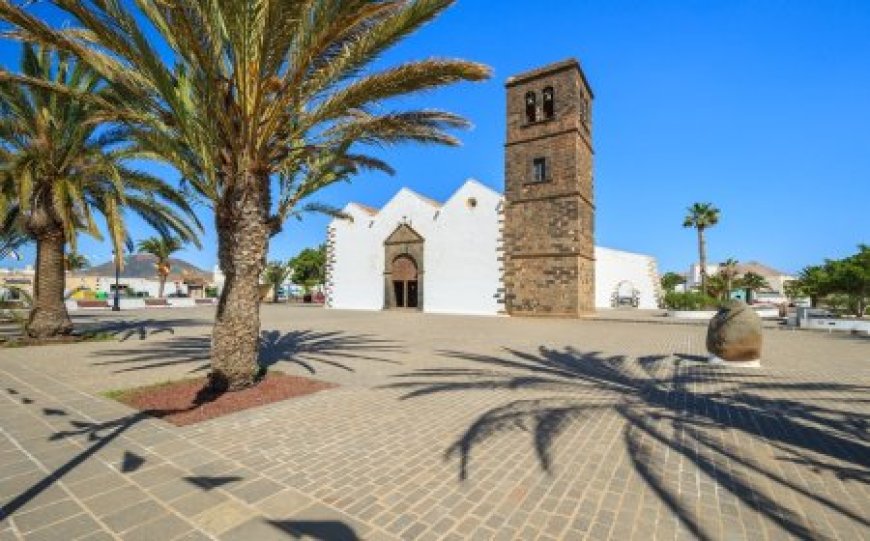
By far the most impressive building in the village is the church, which stands proudly in the main square and is built entirely from local stone. The tower was the first part of the structure to be erected, around 1700, and is thought to have been used as a watchtower to spot pirates, who were active in the surrounding waters at the time.
The rest of the church was completed by 1711 and is dedicated to Our Lady of Candelaria. Inside, it houses a number of notable artworks, including a large painting of the Last Judgement, depicting scenes of heaven and hell — perhaps designed to keep the younger members of the congregation in line.
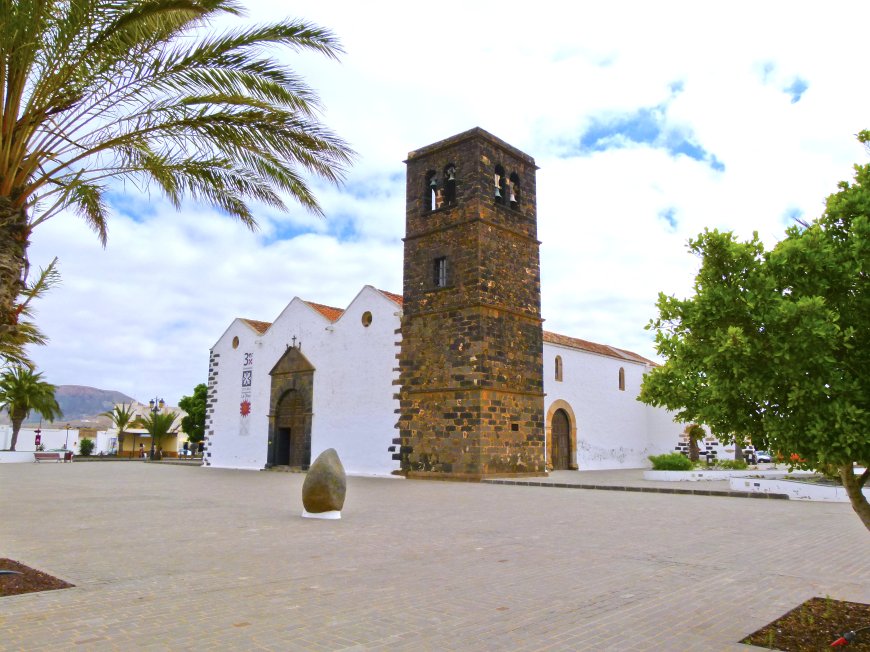
The church in La Oliva, built from local stone and standing at the heart of the village.
La Cilla in La Oliva
From the church in La Oliva, a short walk towards the El Cotillo road will bring you to a beautifully restored building known as La Cilla, or the Granary Museum.
Built around the same time as the church, it was originally used to store tithes — taxes paid to the clergy, often in the form of grain and produce. The amounts were also calculated here, based on what was available on the island at the time, helping to control supplies and ensure there was enough to feed the population during difficult periods.
Today, the museum explains the hardships faced by those living on a dry and often unforgiving island, and how they adapted to survive. Inside, you can learn about traditional methods of water collection, drainage and irrigation — systems that also help explain some of the unusual patterns and structures you may notice on the mountainsides as you travel around the island.
La Casa de los Coroneles
Walking back towards the centre of La Oliva, you may notice some old stone ruins on your right. These are the remains of La Capellanía, where the priest once lived. The walls were built using local stone, held together with a simple mix of mud and straw.
Just beyond the church and the Ayuntamiento (council buildings), a much larger and more imposing structure comes into view. Standing at the end of the road, it almost resembles a fortress. This is La Casa de los Coroneles, once the seat of power on the island.
From here, the island was governed for more than 200 years by a hereditary line of colonels, a regime often described as strict and, at times, harsh. They made La Oliva the capital during this period, although many spent much of their time away from the island.
Surrounding the building, you can still see traces of the old agricultural landscape, with field boundaries that once supported hardy crops such as barley and rye — plants well suited to the island’s dry conditions and tended by local farmers.
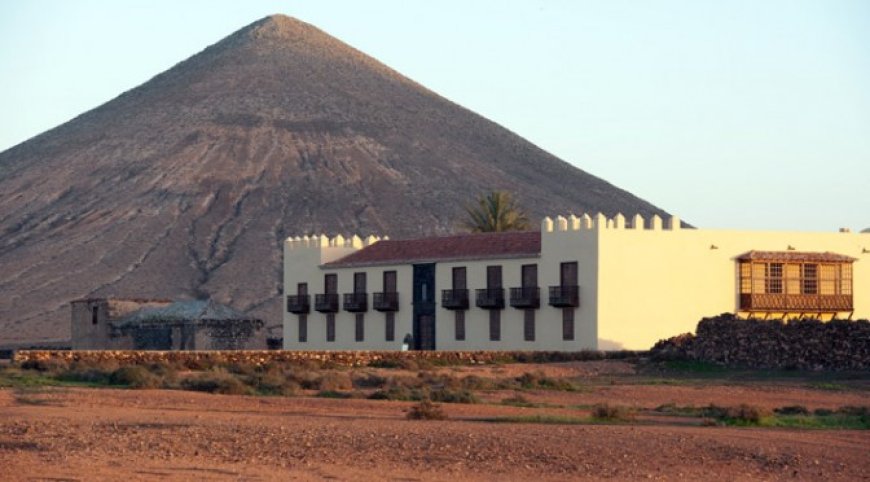
The Casa de los Coroneles in La Oliva, with the surrounding landscape and mountains in the background.
La Oliva Village and Local Facilities
Today, La Oliva is an easy place to stop, park and explore on foot.
There is usually plenty of free parking available, and you’ll find a small refreshment kiosk near the church, along with a selection of bars, cafés and restaurants where you can sit and relax in the sunshine or shade. Public facilities are also available, making it a convenient stop while travelling through the north of the island.
For those arriving by car, there is also a petrol station nearby.
If you’re visiting with children, or simply enjoy wildlife, keep an eye out around Casa de los Coroneles, where you may spot Barbary ground squirrels. Often mistaken for chipmunks, they are quite used to people and can be fun to watch and photograph. As always, it’s best to respect the local wildlife and avoid feeding them.

A Barbary ground squirrel perched on volcanic rocks in La Oliva.
Art and Culture in La Oliva
La Oliva is also home to the Casa Mané Canarian Art Museum, known locally as the Centro de Arte Canario – Casa Mané, offering a chance to explore local art and culture.
For those more interested in local flavours, the nearby Casa del Coronel Pedro is also worth a visit, where you can find traditional products and handmade goods created by artisans from across the island.
La Oliva remains a quiet, unhurried village, with plenty of places to sit and take in the surroundings. It’s the kind of place where you can pause for a moment and imagine what life might have been like here in the past — long before tourism and modern life changed the island.
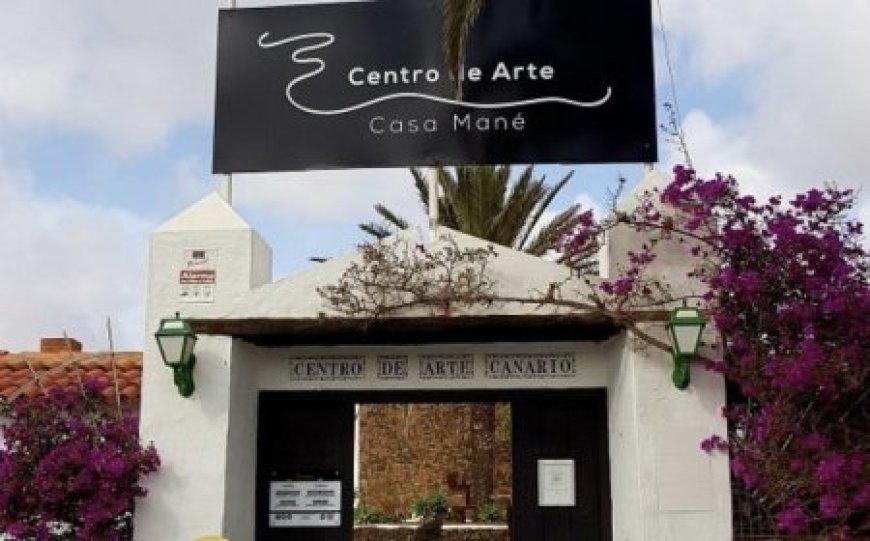
The entrance to Casa Mané Art Museum in La Oliva, showcasing Canarian art and culture.
A Quiet Historic Hub in the North
La Oliva may not be as busy as the island’s coastal resorts, but it plays an important role in understanding the history and character of northern Fuerteventura.
With its links to the island’s former capital, traditional buildings and surrounding rural landscape, it offers a different perspective — one that feels more connected to the past.
Whether you stop briefly while passing through or take time to explore its streets and historic sites, La Oliva provides a quiet and authentic glimpse into life on the island beyond the beaches.
An Article by local Historian, Bernie Power, with The Voice Fuerteventura