Common Octopus - Octopus vulgaris
Common octopus Octopus vulgaris are intelligent reef predators found around Fuerteventura. Learn about their behaviour, camouflage, feeding and lifecycle in Canary Islands waters.
 Luisa
Luisa
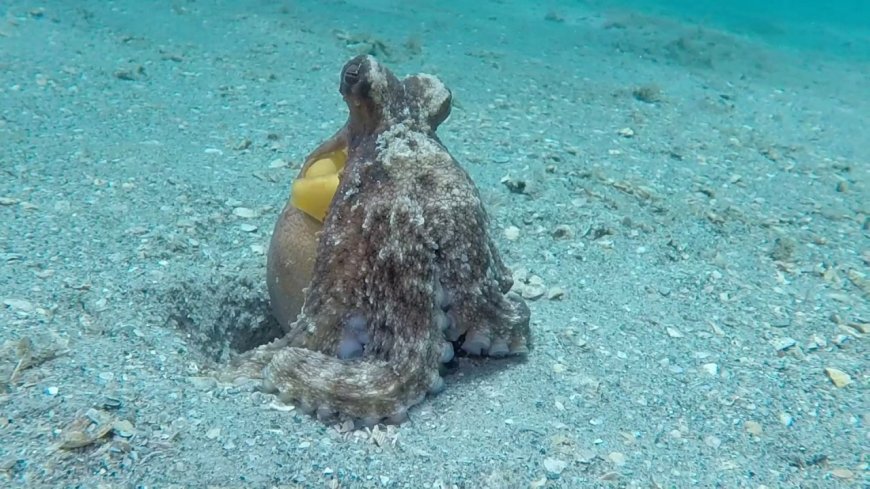
The common octopus is one of the most intelligent and adaptable marine animals found in the waters around the Canary Islands, including Fuerteventura. It is a highly versatile species, capable of changing colour, shape and behaviour to suit its environment.
They are generally solitary animals, most often encountered on rocky seabeds and reef structures where they can hunt, hide and interact with their surroundings.
What they look like
Common octopuses have a soft, rounded body with eight flexible arms lined with suction cups. Their skin is highly specialised and can change colour and texture almost instantly, allowing them to blend into their surroundings or display patterns for communication and camouflage.
They can vary significantly in size depending on age and environment, with arm spans reaching over a metre in larger individuals.
Their eyes are highly developed and give them excellent vision compared to many other marine invertebrates.
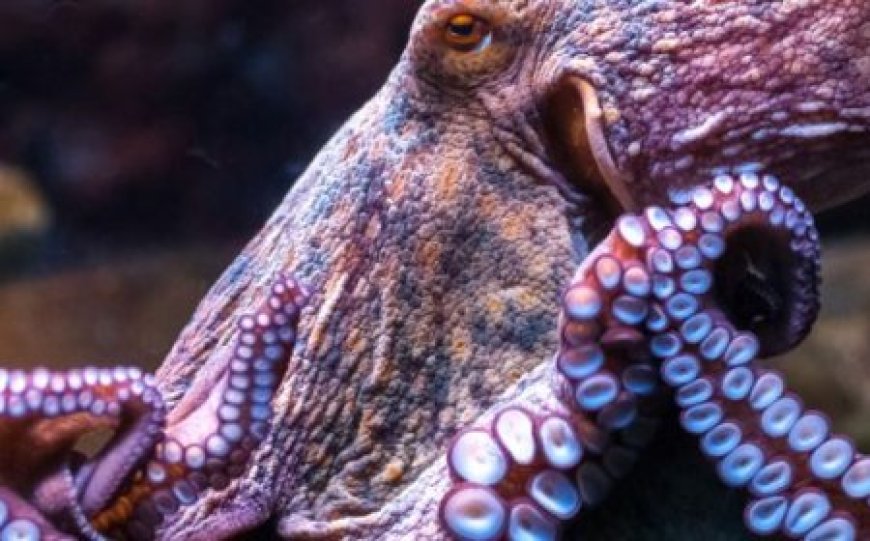
Close up of common octopus arms showing suction cups used for gripping and sensing
Where they live in Fuerteventura
Common octopuses are typically found in rocky reef environments, caves and crevices where they can hide during the day. Around Fuerteventura, they are most often associated with broken reef structures and seabeds that provide shelter and hunting grounds.
They are mainly nocturnal and spend daylight hours hidden from view, emerging at night to hunt.
Their presence is a strong indicator of healthy reef ecosystems with good structural complexity.
Behaviour and intelligence
Octopuses are highly intelligent invertebrates with complex behaviours. They are known for problem-solving abilities, exploration and interaction with their environment.
They use camouflage as a primary defence mechanism, rapidly changing colour and texture to match rocks, sand or algae. This can make them extremely difficult to spot even when nearby.
If threatened, they can eject ink to confuse predators and make a rapid escape.
They are also capable of squeezing through extremely small gaps due to their soft, boneless bodies.
Feeding
Common octopuses are carnivorous predators feeding mainly on crustaceans such as crabs, lobsters and shrimp, as well as small fish.
They use their arms to locate and capture prey, then deliver a bite using a sharp beak hidden within the centre of their arms. Some prey may be paralysed with venom before consumption.
They often hunt at night, using stealth and camouflage to approach prey undetected.
Reproduction and lifecycle
Reproduction in octopuses is a one-time event. After mating, females lay eggs in a sheltered den and guard them continuously until they hatch.
During this period, the female does not eat and focuses entirely on protecting and oxygenating the eggs. Once the eggs hatch, the female typically dies shortly after.
The young hatch as tiny planktonic larvae before settling onto the seabed and developing into adults.
In Fuerteventura
Common octopuses are present in suitable rocky habitats around Fuerteventura but are rarely seen due to their nocturnal behaviour and exceptional camouflage abilities.
Divers and snorkellers may occasionally spot them tucked into crevices or moving slowly across the seabed at night.
They are one of the most fascinating species in the local marine ecosystem due to their intelligence and adaptability.
The common octopus is part of the rich and diverse reef ecosystem found around the Canary Islands. It shares its habitat with species such as parrotfish, zebra sea bream and various invertebrates, all contributing to the balance of coastal marine life.
For more species found in the region, see the Marine Life in Fuerteventura guide.