Burning of the Sardine in Fuerteventura
The Burning of the sardine is an annual event enjoyed by locals and holiday makers alike. It always takes place at sundown and is a spectacle for all the family enjoy. But why does this ritual take place?
 Luisa
Luisa
In many European countries, Ash Wednesday is celebrated by the drawing of a cross on the forehead, made from ash, in commemoration of Jesus sacrifice on the cross. But in Fuerteventura, they have a much more colourful, wild and whacky way to celebrate this Holy day and its known as the Burning of the Sardine.

ASH WEDNESDAY AND LITTLE CROSSES
The ash used to draw little crosses on peoples foreheads often comes from the palm leaves from the previous years Palm Sunday celebrations. These leaves are burnt and turned to ash. A little of it is then used to sign the cross on foreheads signify the beginning of Lent and to “Remember that you are dust, and to dust you shall return.”
Here in the Canary islands, there is also a ceremony which uses fire to remind us where we came from and to mark the first day of Lent, but this ceremony is a much more lavish affair and whole towns or villages get involved.
‘ENTIERRO DE LA SARDINA’ OR THE BURIAL OF THE SARDINE
Anyone visiting here for the first time, will be surprised to hear that we have a ceremony called ‘Entierro de la sardina’ or The Burial of the Sardine. In fact, as we live on an island that has easy access to the ocean, here it is more commonly referred to as The burning of the sardine rather than the burial. So what is this strange ceremony and why do we celebrate it?
END OF CARNIVAL
The burial of the sardine is an annual ceremony that takes place on Ash Wednesday, all over Spain and in some South American countries. It signifies the end of the Carnival season and all of its festivities. It is a symbolic burial of the past and a time to welcome in a period of personal and communal rebirth. The passing through fire is thought to symbolise the ridding of vices, many of which are often carried out to excess during carnival, and the restoration of order after all the craziness.

CEREMONY IN THE STREETS
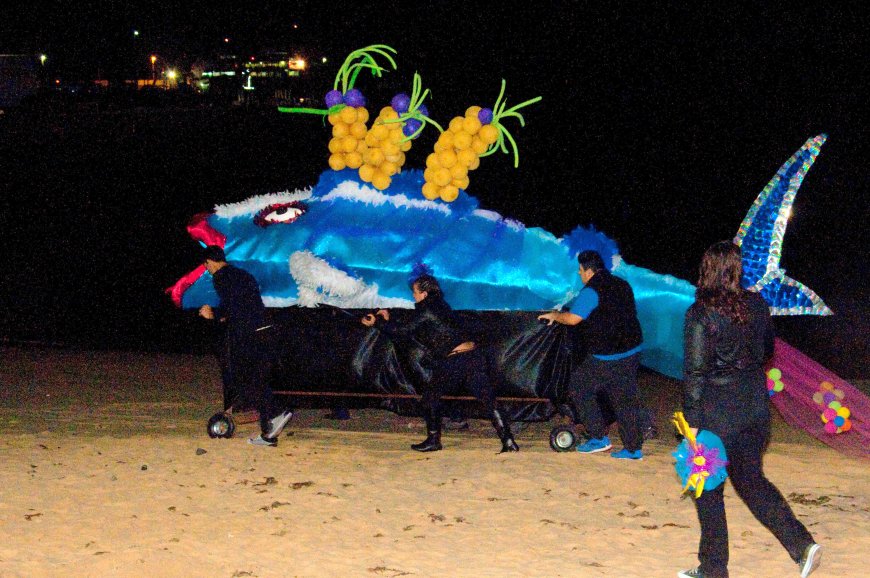
The ceremony itself cosists of procession that is usually headed by someone pretending to be the Public Prosecutor, (dressed like a judge) whose job is to clear the streets and make way for the sardine. He is accompanied by a (fake) Priest and his assistant, and followed by a giant manmade effigy of a sardine! Yes, you read that right... it is an effigy of a massive fish!
In some countries a cardboard coffin or decorated carriage is used to transport the real or fake sardine. Here it is a huge, highly decorated manmade fish, carried by about ten or so people. Following the sardine are widows adorned in black or traditional costume, often with lace covering their faces to show they are in mourning. If you look closely, many of them will also be big burly men dressed as wailing women too, as it is the perfect opportunity to dress up and have a bit of fun.
THE BURNING ON THE SHORELINE
As the procession continues through the town, the women confess their sins to the fake priest and lament the death of the sardine with fake screams, rants and wails. This is quite an over-dramatic and noisy affair but If you look carefully, you will also see that somewhere in amongst them, lurks the Devil.
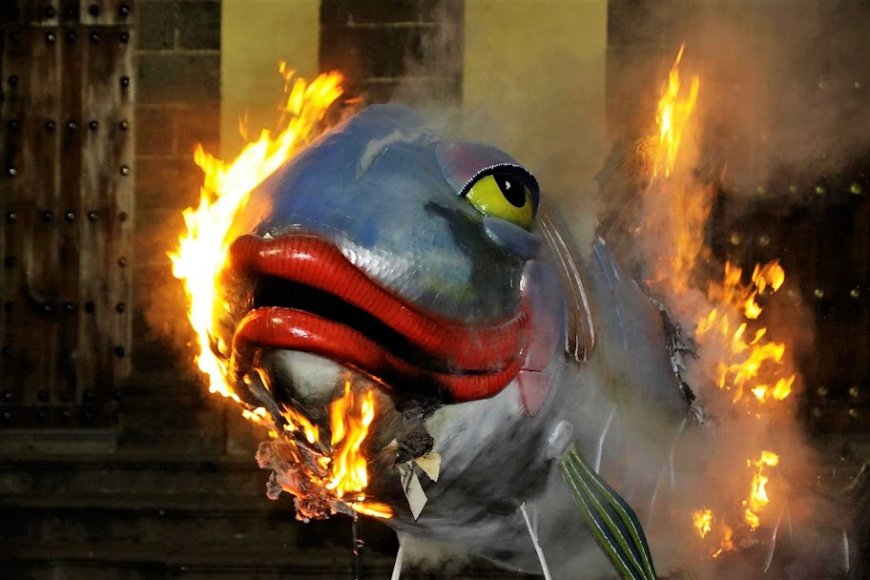
The Devil's job is to try and steal the sardine before he gets to the burial place, which in this case the sea front, but is often chased away by the local policemen on duty that night or the (fake) priest. Finally, after a lot of larking about through the main street, the procession reaches the shoreline and the ceremony heightens to a bit of a frenzy as the sardine is placed in the water and set alight, which is quote a sectacle against the dark Atlantic ocean. The celebration ends with a bit of a beach party as the sardine burns in the background, signifying that carnival is over for another year.

KING CHARLES III
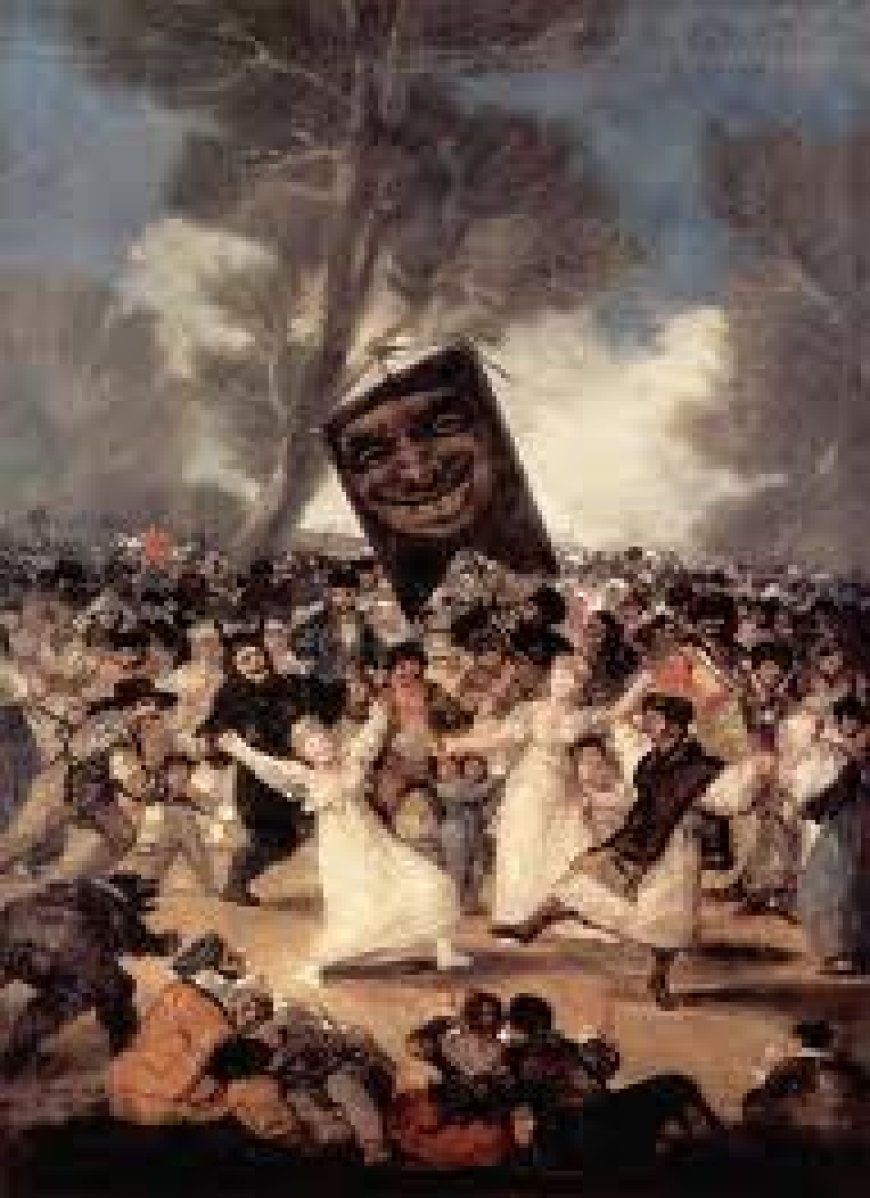
No one really knows exactly when or where this celebration comes from, as it dates back right through history. The famous Spanish artist, Franciso Goya, painted “El Entierro de la Sardina” sometime between 1812 and 1819, but many believe it goes back even further into the 17th Century and the reign of King Charles III of Spain.
According to the story, the King Charles wanted the commoners to celebrate the end of Carnival with him, so he ordered a meal of sardines and wine for all of them to enjoy. However, it was a really hot day and soon the fish began to smell and the only way to get rid of the foul stench was to bury all of the sardines. They say that this waste of good food was met with wails of mourning by the people in attendance, as they were left with no food to eat, before entering into the period of abstinence.
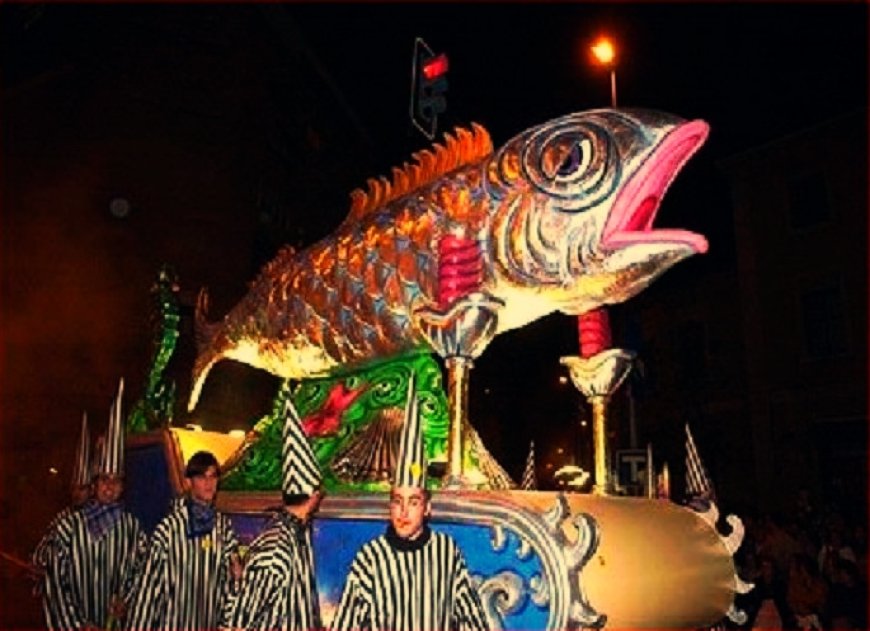
Photo: Murcia - Burial of the sardine
WAS IT REALLY A FISH?
The second theory speaks of a pig which was bought out into the centre of town and buried on the first day of the holy period, whilst everyone watched. This burial was used to show that from that day, the commoners would have to forfeit eating meat for the holy period. The particular breed of pig used in the burial ceremony was known as a ‘Sardine” and is another possible explanation as to the ceremony’s strange name.
In truth, no one really knows where its name came from but one thing that is certain, is that this celebration is great fun for all the family and well worth watching, so get involved. Follow the procession all the way down to the shore, then at dusk be nesr the shoreline to make sure you get a good view. It will be busy, and also fun so get involved, bring your cameras and join in the fun.
Corralejo 2013 - Photo By Steve Goldsmith